A Complete Guide to Bengali Wedding Rituals (And How Each One Should Be Photographed)
By Jeet Biswas Photography — বিবাহ কাহিনী (Bibaho Kahini)
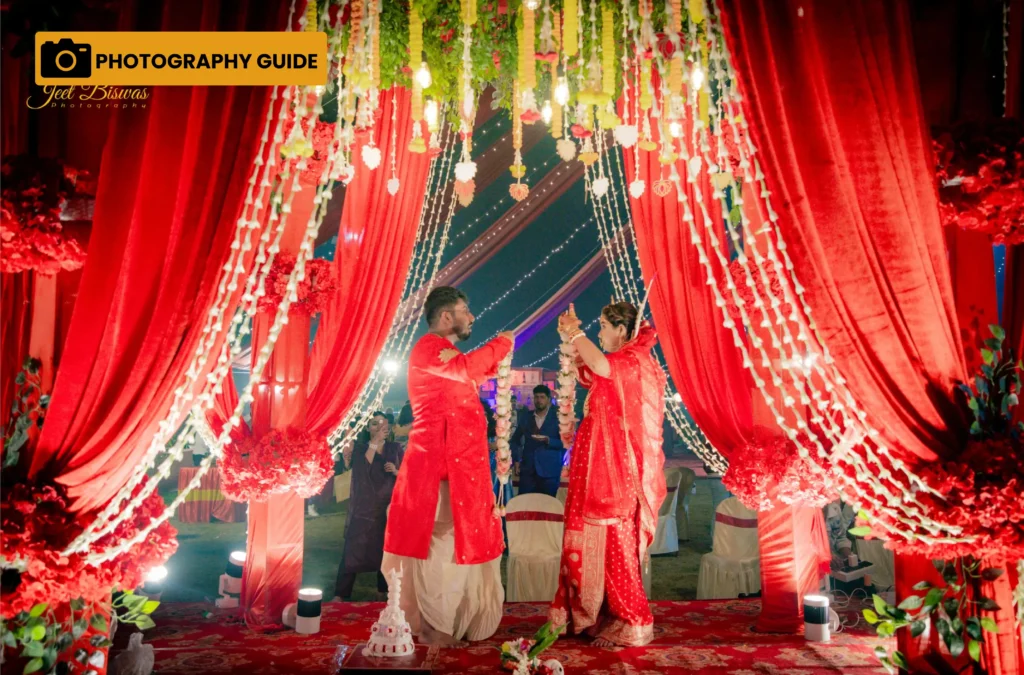
Understanding Bengali wedding rituals photography starts with understanding the rituals themselves — each one carries its own emotional tone, visual style, and key moments a photographer shouldn’t miss. Here’s a walkthrough of the major rituals in a Bengali wedding, and what good coverage of each one looks like.
1. Ashirbad (Blessing Ceremony)
Ashirbad is when both families formally bless the couple, usually with rice, sandalwood paste, and gifts. It’s a quieter, more emotional ritual than the ones that follow.
Photography focus: close-up shots of blessings being given, emotional reactions from parents and elders, and detail shots of the ritual items involved.
2. Gaye Holud (Turmeric Ceremony)
One of the most colorful and joyful pre-wedding events, where turmeric paste is applied to the bride and groom by family and friends. Read our full guide to Gaye Holud photography for a deeper breakdown of this ritual specifically.
Photography focus: candid, high-energy shots — turmeric application, playful family interactions, bright yellow and marigold decor.
3. Dodhi Mangal
An early-morning ritual where the bride, accompanied by married female relatives, eats a symbolic meal of curd and rice before the fasting period leading up to the wedding.
Photography focus: soft, early-morning natural light; intimate, quiet family moments rather than large group shots.
4. Bor Jatri and Bor Boron (Groom’s Arrival)
The groom’s procession arrives at the wedding venue, often with music and dancing, and is formally welcomed by the bride’s family.
Photography focus: wide shots capturing the scale and energy of the procession, plus tighter shots of the formal welcome — arti, forehead tilak, and the families greeting each other.
5. Shubho Drishti (First Sight)
This is one of the moments Bengali wedding rituals photography is built around — the bride is carried on a piri (wooden stool) by her brothers, and the couple sees each other for the first time.’ This works naturally since it’s already your most visually significant ritual.
Photography focus: this moment happens fast — a second photographer or a well-positioned lead shooter is essential to catch both the reveal and the couple’s genuine reactions simultaneously.
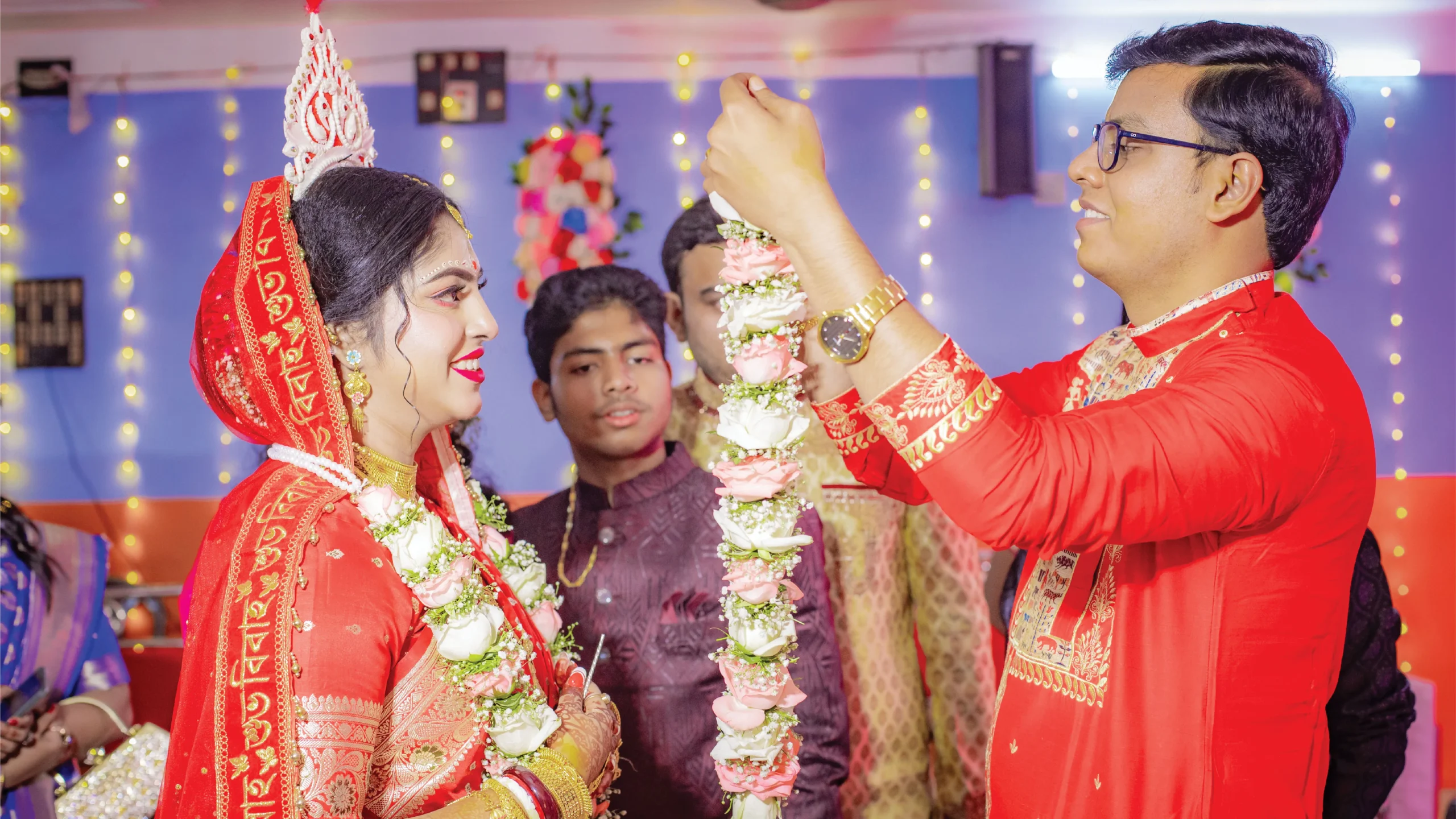
6. Mala Badal (Garland Exchange)
The couple exchanges garlands three times, symbolizing their acceptance of one another — often a lighthearted, sometimes exciting moment given the height of the piris.
Photography focus: timing is everything here; burst-mode shooting helps capture the exact moment of exchange along with candid laughter from the crowd.
7. Saat Paak and Sampradan
The bride is carried around the groom seven times, followed by the formal giving away of the bride by her father.
Photography focus: wide circular framing to capture the movement, plus emotional close-ups of the father during Sampradan — often one of the most moving moments of the entire ceremony.
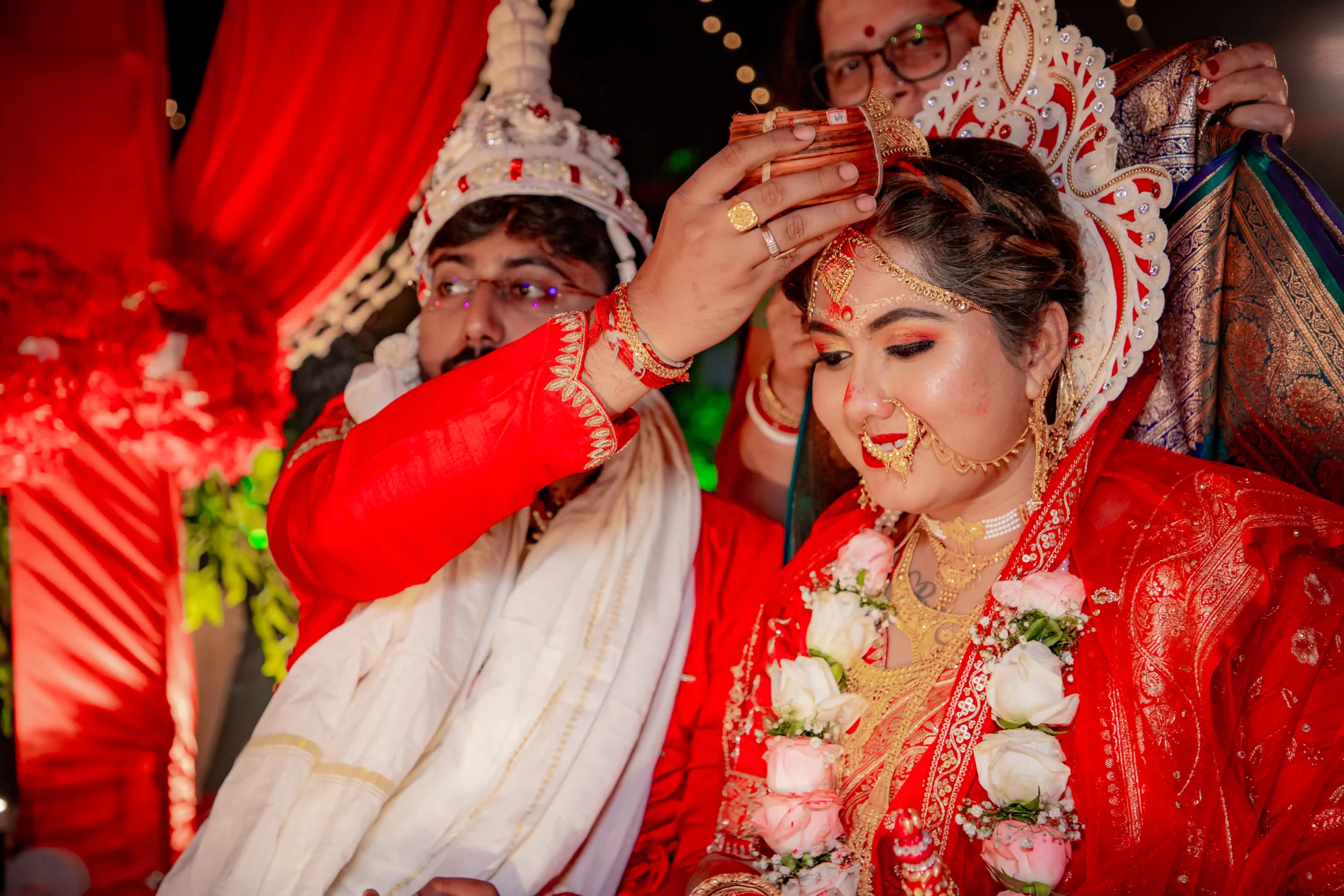
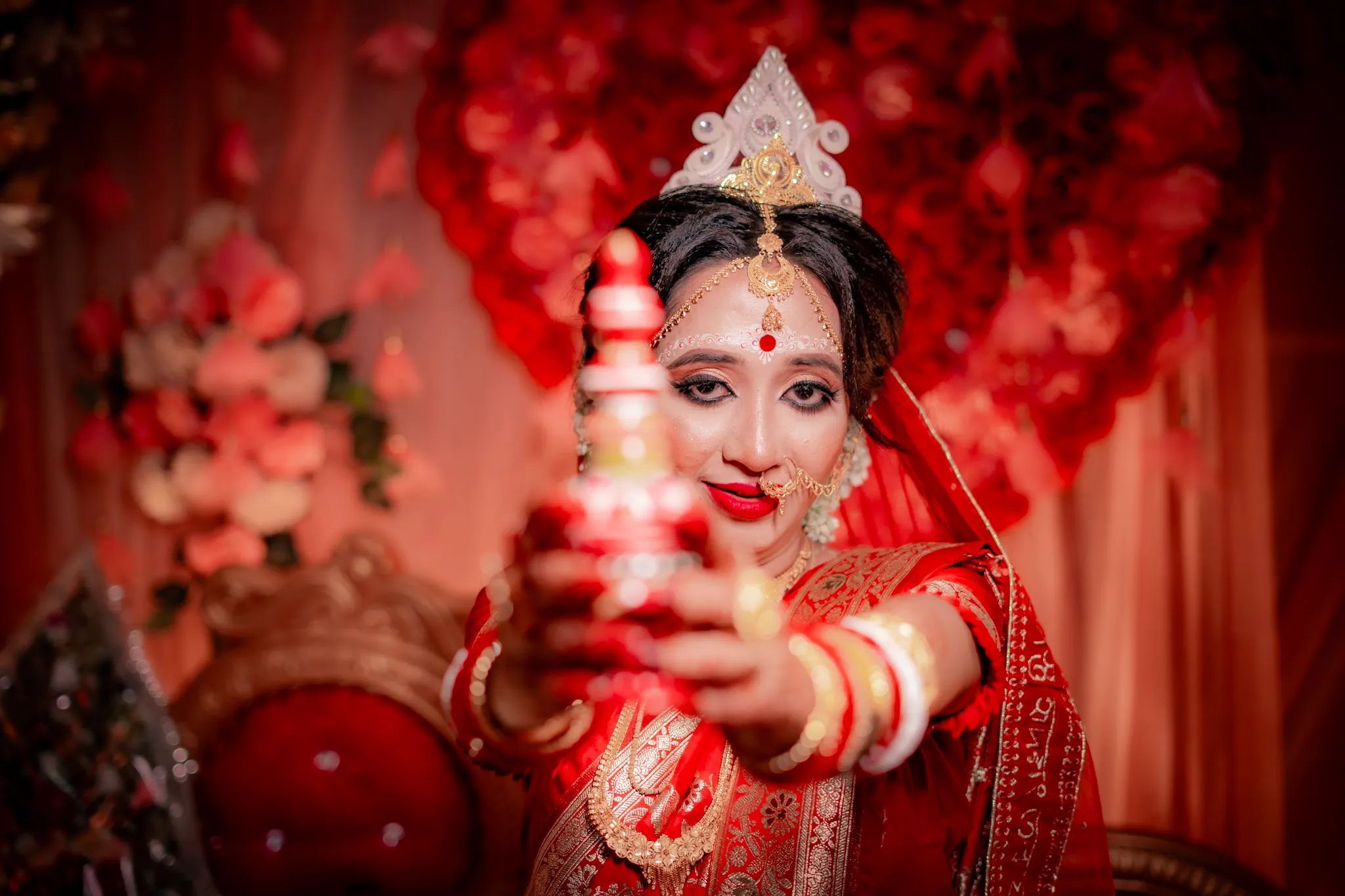
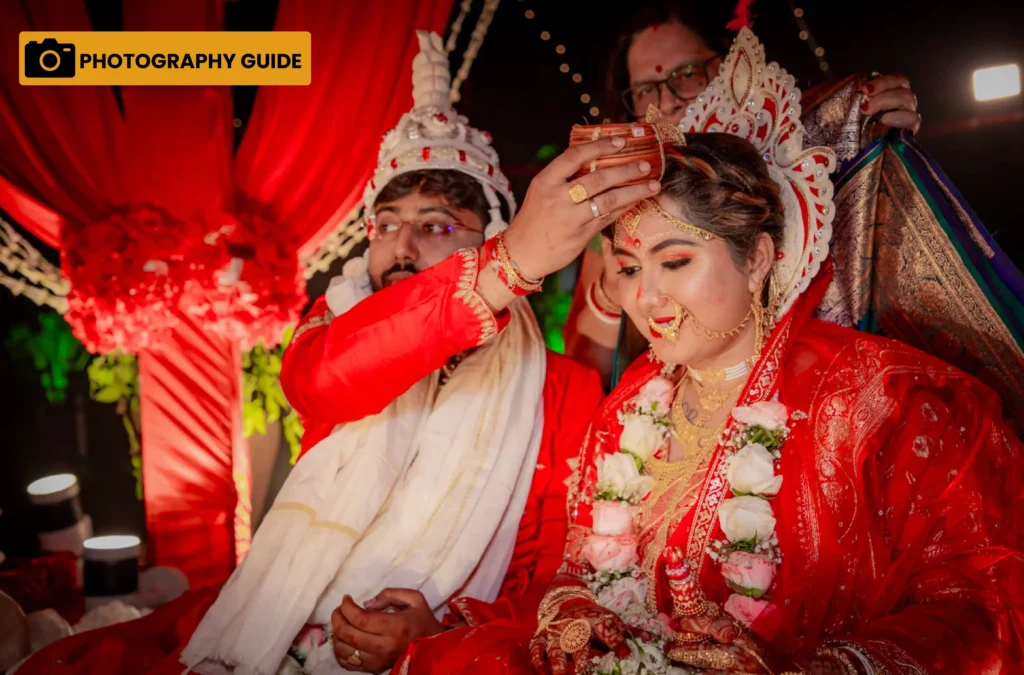
8. Sindoor Daan and Ghomta
The groom applies sindoor (vermillion) to the bride’s hair parting, and covers her head with his shawl — marking her as a married woman.
Photography focus: a slightly elevated angle works well here to capture both the ritual gesture and the couple’s expressions clearly.
9. Bidaai (Farewell)
The emotional farewell as the bride leaves her family home. Often the most tearful moment of the entire wedding.
Photography focus: candid, unposed shots are essential here — this is not a moment to direct or stage; the best images come from staying alert and shooting continuously as it unfolds.
10. Bou Bhaat (Reception)
Held at the groom’s home a day or two after the wedding, this is the bride’s formal introduction to the groom’s extended family and friends.
Photography focus: a mix of formal family portraits and candid reception coverage — food, toasts, dancing, and the couple meeting new relatives for the first time.
Why Ritual-Specific Photography Planning Matters
Good Bengali wedding rituals photography isn’t about showing up and shooting everything the same way — each ritual has a different pace, lighting condition, and emotional tone. Planning ahead with your photographer, sharing which rituals matter most to your family, and confirming second-shooter coverage for fast-moving moments like Shubho Drishti makes a measurable difference in your final gallery.
How Jeet Biswas Photography Approaches Ritual Coverage
At Jeet Biswas Photography, we plan every wedding around its specific ritual timeline — not a one-size-fits-all shot list — so nothing important gets missed, whether it’s a quiet Dodhi Mangal or the chaos of Bor Jatri. Browse our portfolio to see how we’ve documented full Bengali wedding ceremonies from Ashirbad through Bou Bhaat.
📞 Call or WhatsApp us at +91 93716 70666 to plan complete coverage for your wedding rituals.
Frequently Asked Questions
Do I need to share a full ritual schedule with my photographer in advance? Yes — es — this is one of the most valuable things you can do for Bengali wedding rituals photography. It helps your photographer plan positioning, lighting, and second-shooter coverage around fast-moving or especially important moments
Which Bengali wedding ritual is hardest to photograph well? Shubho Drishti and Bidaai tend to be the most challenging, since both involve fast, emotional, unrepeatable moments — having a second photographer positioned differently helps capture both from multiple angles.
Should all rituals get equal photography coverage? Not necessarily — most couples prioritize a few key rituals (like Shubho Drishti, Sindoor Daan, and Bidaai) for more intensive coverage, while quieter rituals like Dodhi Mangal get lighter, more intimate documentation.